
Shopping cart
You have no items in your shopping cart.
Last Updated: November 19, 2026
Quick Summary
Genuine handmade embroidered pillow covers show uneven, hand-stitched irregularities and a clear origin, unlike mass-produced machine work with identical stitches in a regular grid. Choose a fabric suited to where the pillow will sit, buy an insert one size up from the cover measurement, and wash in cool water inside out.
Walk into any home decor shop and you will find pillow covers that look embroidered from across the room. Pick one up, though, and the stitching often tells a different story. Choosing a genuine handmade piece from Haiti means knowing what to look for, and Papillon Marketplace has put together this guide to help you do exactly that. Whether you are buying for your own sofa or as a gift, the details below will help you pick a cover you will still love years from now.
Handmade embroidery rarely looks perfectly uniform, and that is usually a good sign. Hand stitching shifts slightly from one motif to the next, and the thread tension varies a little across the surface. Machine embroidery, by contrast, produces identical stitches in a regular grid.
Authentic pieces are also usually sold with a clear origin story. Papillon Marketplace's embroidered goods are made by artisans in Haiti. Be cautious with listings that mention "Haitian-inspired" or "Caribbean style" without naming who actually made the piece.
Turn the cover over before you buy, if you can see a photo of the reverse. Hand-embroidered pieces often show the working side of the stitches, with thread carried neatly across the back and few long floats. Ends should be secured rather than left loose.
Watch out: a perfectly clean reverse is not proof of anything on its own, since some machine work is also tidy. Combine what you see on the back with the surface irregularities and the origin details before deciding.
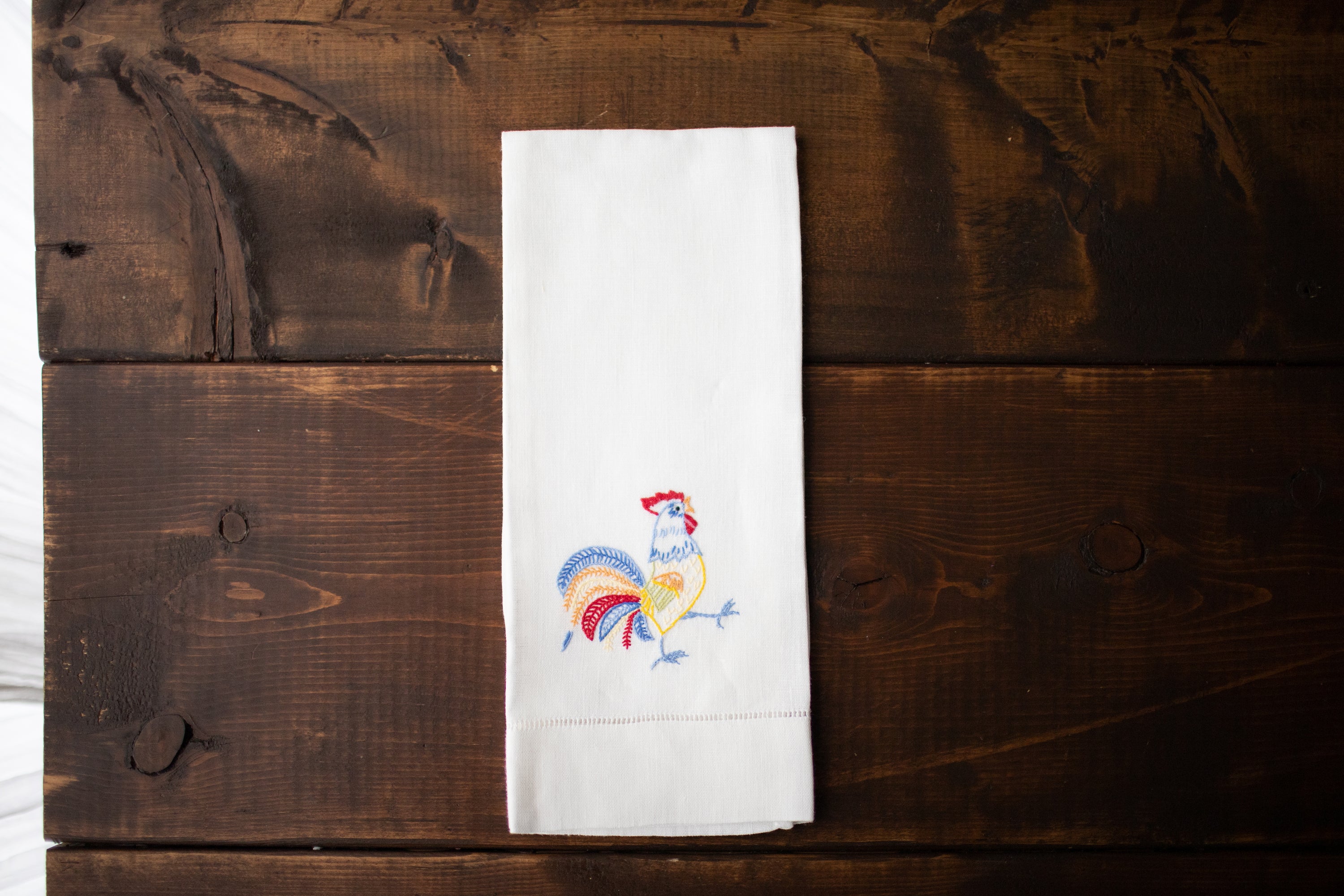
The fabric and thread tell you a lot about durability. Papillon's Textured Pillow Cover is made from repurposed upholstery remnant fabric, while the Tea Towels - Rooster are 100% linen. Knowing the base material helps you judge how a cover will wear and wash.
The right material depends on where the pillow will live. Upholstery-weight fabrics hold up to daily use on a sofa or reading chair, while lighter linen suits decorative spots that see less contact. Papillon's Textured Pillow Cover gives you a sturdy, textured option in a 16" x 16" square or a 12" x 16" rectangle, and it is a useful reference point if you are comparing embroidery styles and fabric weights side by side.
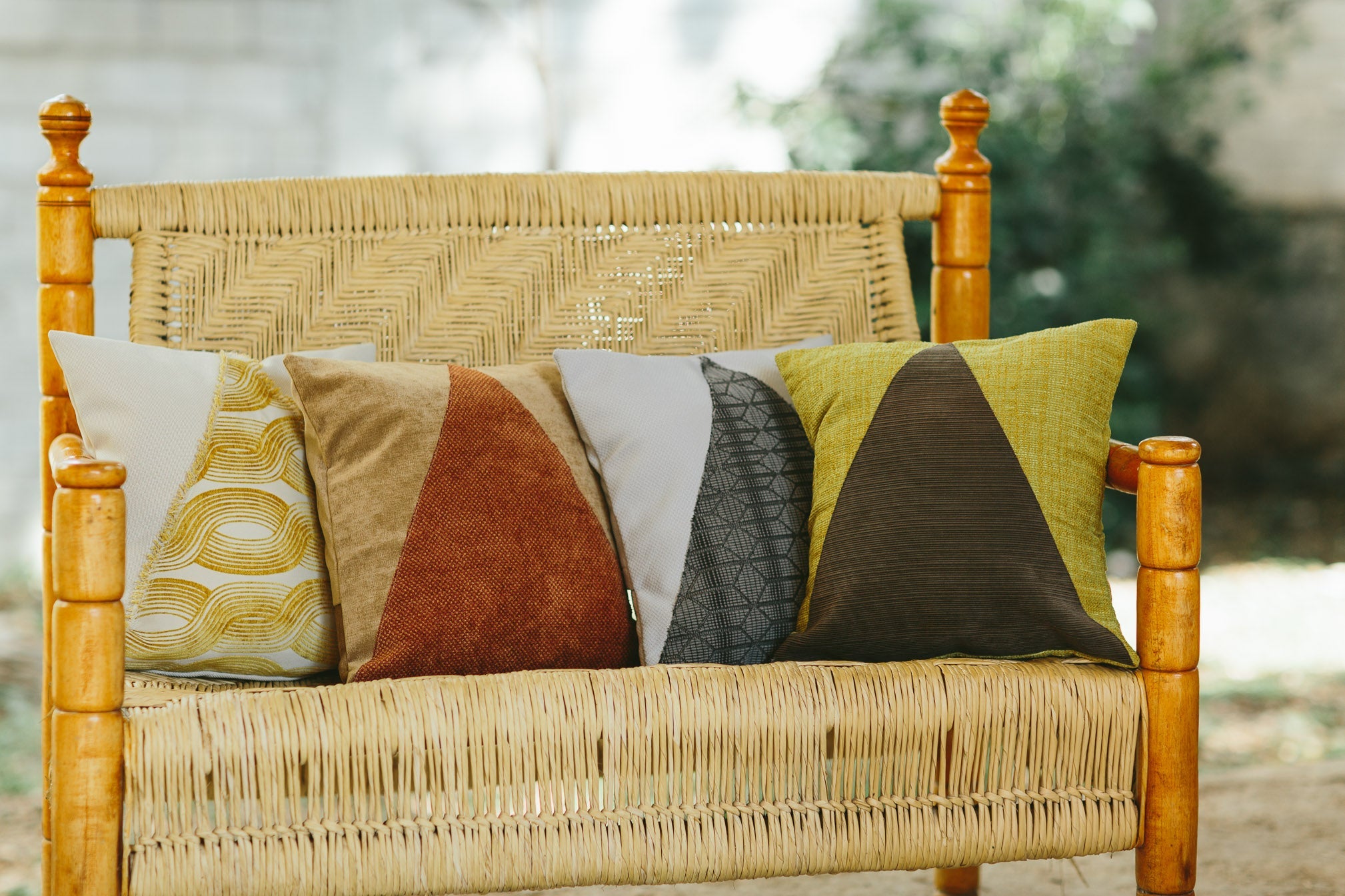
Embroidery style is mostly a matter of taste, but a few practical points help. Dense, heavily worked motifs look striking up close but show more wear in high-contact areas. Lighter, open designs suit spaces you want to feel calm. Consider how bold your room already is before adding a richly patterned cover.
Most embroidered covers are sold as covers only, so the insert is a separate purchase. Getting the fit right is the difference between a cover that looks tailored and one that sags at the corners or strains at the seams. The usual approach is to buy an insert one size up from the cover measurement, so the pillow sits full without stretching the fabric.
Measure the cover flat, seam to seam, rather than measuring the insert you already own. A cover that has been washed may have relaxed slightly, so take the measurement at the widest point and again at the seam line. For a square cover, both numbers should match; if they differ by more than about half an inch, the cover has likely gone out of square and will never sit flat.
A 16 x 16-inch cover is a common size for sofas and beds. For a plump, full look, pair it with a 16 x 16-inch down or polyester insert, or go up to 18 x 18 inches for a firmer profile. Going up one size keeps the corners crisp and the front flat. The same logic scales: a 12 x 16-inch rectangle cover takes a 12 x 16-inch insert for a soft look or a 14 x 18-inch insert for a firmer one, and a 20 x 20-inch cover takes a 22 x 22-inch insert. Down inserts compress over time and can be fluffed back into shape; polyester holds its loft longer but can feel springy. Most practitioners find that a down-alternative insert in the one-size-up measurement gives the best balance of fullness and durability for an embroidered cover that will be sat against.
Check the cover's closure before you buy, since a hidden zipper makes swapping inserts much easier than a fixed seam. A well-finished cover has a zipper opening at least 12 inches long on a 16-inch cover, so the insert can be inserted without forcing it through a tight gap. Look for seams that are serged or French-seamed on the inside, since raw edges fray with washing. Envelope closures, where the back fabric overlaps, are common on handmade covers and are easy to work with, but they can gap open if the overlap is less than about four inches.
Watch out: an insert that is too large is worse than one that is too small, because it puts constant tension on the embroidery and can pull stitches loose over time.
The article's key sizing rules, at a glance:
| Cover size | Suggested insert | Note |
|---|---|---|
| 16 x 16 inches | 16 x 16 or 18 x 18 inches | Go one size up for a firmer profile |
| 12 x 16 inches | 12 x 16 or 14 x 18 inches | Soft or firmer look |
| 20 x 20 inches | 22 x 22 inches | Insert one size up |
| Zipper opening | At least 12 inches on a 16-inch cover | Makes inserts easier to swap |
| Envelope overlap | At least four inches | Less risk of gapping open |
| Water temperature for washing | No warmer than about 85°F | Use cool water |
Handmade embroidered covers work best as a focal point, so place them where they can be seen. On a neutral sofa, a single bold cover anchors the whole seating area. Pair it with plain throws and one or two solid-colored pillows so the embroidery has room to stand out.
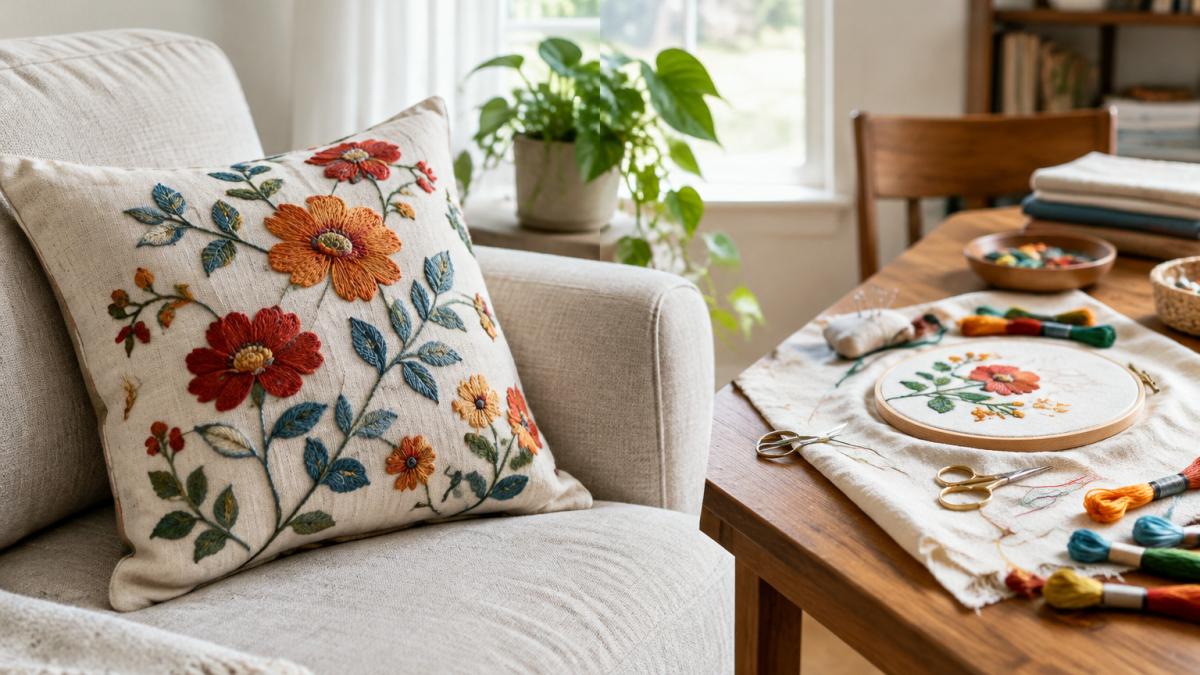
In kitchens and dining areas, smaller textiles carry the same handmade feel. Papillon's Tea Towels - Rooster suit a kitchen or dining space and tie in well with embroidered pillows in the same palette. For a softer, scented accent in a drawer, linen closet or bedroom, the Sachet Set - Maison Lavender brings matching handmade detail without taking up much room.
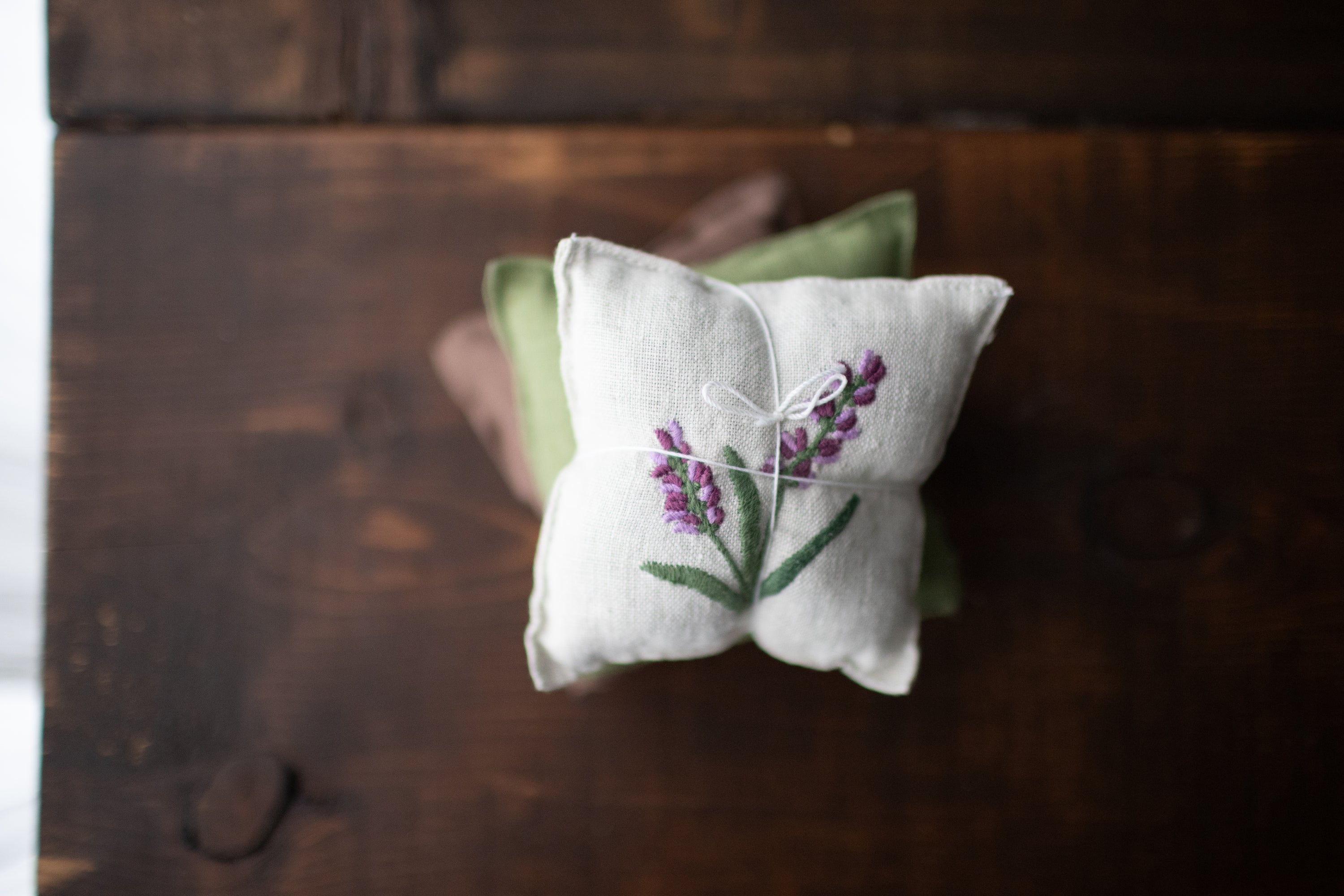
Think in threes when you style a room: one large embroidered piece, one medium textile and one small accent. This keeps the look coordinated without feeling matched too precisely.
Turn the cover inside out first to protect the embroidery. Avoid wringing, since that can pull stitches out of shape. Lay the cover flat to dry, away from direct heat.
Fill a basin with cool water, no warmer than about 85°F, and add a small amount of mild liquid detergent. Submerge the cover inside out and let it soak for ten to fifteen minutes. Agitate gently with your fingers rather than scrubbing, and pay attention to the areas around the embroidery where body oils collect. Rinse in cool water until the water runs clear. To remove excess water, press the cover between two clean towels rather than twisting or wringing it. If the care label allows machine washing, use a mesh laundry bag, a gentle cycle, and cold water, and skip the spin cycle or set it to low.
Lay the cover flat on a drying rack or a clean towel, reshape it to its finished dimensions while damp, and let it air dry away from direct sunlight and radiators. Hanging a damp embroidered cover can stretch it out of shape. If the fabric is wrinkled after drying, press it on the reverse side with a cool iron, placing a thin cotton cloth between the iron and the embroidery. Never press directly on the stitches, since a hot iron can flatten the thread and leave a shine.
If a thread begins to loosen, trim the loose end carefully rather than pulling, and have it secured before the stitch unravels further. A snag that has pulled a loop of thread to the surface can often be worked back to the reverse with a blunt needle from the back side. For a broken stitch, a few hand stitches in a matching thread will stabilize the motif; the repair does not need to be invisible, since handmade work already shows variation. Check the cover every few months for loose ends along the borders, where wear shows first.
Store clean, fully dry covers folded in a breathable cotton bag rather than a sealed plastic bin, which can trap moisture. Avoid folding along the same line every season, since a sharp crease can weaken embroidery threads over time. Papillon's Tea Towels - Rooster are listed as machine washable and tumble dry.
Papillon Marketplace lists its Tea Towels - Rooster and Sachet Set - Maison Lavender as fair trade verified. The Tea Towels - Rooster are made in Haiti by women artisans, and their listing states that 100% of proceeds from each sale support those artisans and their families.
When you shop, look for clear verification on the product page and ask questions if the sourcing is unclear. A fair-trade label should describe a real arrangement with the people who made the item, not just a marketing phrase.
Start with where the cover will live, then choose the material that suits that spot. Measure your existing insert or sofa cushion, pick a size that fills the cover without straining it, and check the origin and fabric details on the listing. Papillon's collection is built around handmade work from Haiti.
Browse the full range at Papillon Marketplace and find a piece that suits your room and your values.
Each cover is hand-embroidered by artisans in Haiti, so stitch spacing, motif placement and color shading vary slightly from piece to piece. Papillon Marketplace's Textured Pillow Cover is made in Haiti from repurposed upholstery remnant fabric and is sold for $24.00 in a 16-by-16-inch square or a 12-by-16-inch rectangle.
A 16-by-16-inch cover is usually filled with a 16-by-16-inch insert so the cover looks full and sits square. Slightly larger inserts, such as 18 by 18 inches, will fill the cover more tightly and can look plumper. Papillon Marketplace notes that forms are available upon request for an additional fee, which is a convenient option if you do not already own an insert of the right size.
Papillon Marketplace's linen tea towels, for example, are machine washable and tumble dry, but you should still avoid aggressive wringing that can pull threads.
Buy directly from a brand that publishes its artisan partnerships and fair-trade practices. Papillon Marketplace lists some of its products as fair-trade verified, and its brand description notes that it provides training and sustainable jobs for Haitian artisans. Look for clear details about who made the item, where it was made and how the artisans are compensated before you purchase.
