
Ethical Home Decor for Modern Homes: 2026 Guide
Table of Contents
- What Ethical Home Decor Means for Modern Homes
- How to Spot Greenwashing in Home Decor
- Fair Trade Home Accessories That Actually Prove Their Claims
- Sustainable Interior Design Tips for a Modern Aesthetic
- How to Clean Haitian Metal Wall Art Without Damaging It
- Budget-Conscious Ethical Sourcing: Small Pieces, Big Impact
- End-of-Life Disposal and Local Sourcing for Ethical Decor
- Frequently Asked Questions
Last Updated: September 12, 2026
What Ethical Home Decor Means for Modern Homes
Ethical home decor for modern homes means choosing pieces whose materials, labor, and lifespan you can stand behind. At Papillon Marketplace, that definition holds up whether a piece costs $9 or $70: it is about knowing where something came from and who made it.
Shoppers increasingly pay more for transparent supply chains, and home goods rank high on that list. Below are the three pillars that separate genuine ethical decor from marketing language.
The Three Pillars: Materials, Labor, and Longevity
Every ethical home decor purchase rests on three questions: What is it made from? Who made it, and were they paid fairly? How long will it last?
Materials come first. Recycled steel, reclaimed wood, natural fibers, and organic clay reduce demand for virgin resources. Steel drum art is a good example: each piece is cut and hammered from a recycled 55-gallon drum.

Labor is the pillar most brands hide. Fair trade certification and published artisan partnerships are the proof points to look for. Small-batch production by named artisans beats anonymous factory output every time.
Longevity ties it together. A piece built to last decades has a lower carbon footprint than three cheap replacements.
How to Spot Greenwashing in Home Decor
Greenwashing in home decor looks like vague language with no verifiable claim behind it. If a label says "eco-friendly" but names no material, certification, or maker, treat it as marketing copy, not a product claim.
The Federal Trade Commission's Green Guides set the standard for environmental marketing claims in the United States. The Guides are not a certification, but they describe how the FTC evaluates whether a claim is deceptive. Two principles do most of the work: a claim must be specific, and it must be substantiated. "Made with recycled content" is specific. "Sustainable" is not, because it has no agreed definition and no measurable threshold.
The Four Claim Types to Sort Before You Buy
Most decor marketing falls into four buckets. Knowing which one a claim sits in tells you how much proof to demand.
- Material claims. "Recycled steel," "reclaimed wood," "organic cotton," "natural fiber." These are testable. Ask what percentage is recycled, or whether the fiber is certified organic.
- Process claims. "Handmade," "small-batch," "artisan-made." These are meaningful only when paired with a named maker or published production method.
- Certification claims. Fair trade, organic, and recycled-content programs issue traceable credentials. A logo with no certificate number or issuing body is decoration.
- Outcome claims. "Carbon neutral," "zero waste," "planet-friendly." These are the hardest to verify. Treat them as aspirational until the brand publishes its methodology.
The Five Tells That Survive Scrutiny
Watch for these when comparing two pieces side by side:
- Unverifiable adjectives. "Natural," "green," and "planet-friendly" mean nothing without specifics. "Natural" is especially slippery, since lead and mercury are natural.
- Missing supply chain transparency. Ethical brands name their materials and their partners. If the maker is anonymous, the labor claim is unverifiable.
- Certification logos with no number. Legitimate fair trade programs issue traceable credentials you can look up.
- No care instructions. A brand that expects a piece to last tells you how to maintain it. Missing care guidance is a longevity red flag.
- A single green attribute doing all the work. A product can be made from recycled steel and still ship in plastic or be finished with a solvent-based coating. One good attribute does not make a piece ethical.
A Practical Comparison Method
When two pieces look similar, run the same three questions against both: What is it made from, and can the brand name the material? Who made it, and is the maker named? What happens to it at end of life? A piece that answers all three beats one that answers a single question with a nicer adjective.
Pro Tip
Screenshot the product page before you buy. If a brand later changes its language, you have a record of the exact claim you relied on. This is also useful if you ever need to file a complaint with the FTC or your state attorney general.
The Federal Trade Commission's Green Guides remain the reference point. If a company's language would not survive that scrutiny, it is not ethical sourcing.
Fair Trade Home Accessories That Actually Prove Their Claims
Fair trade home accessories prove their claims through named artisans, published materials, and consistent production, not a single logo. Papillon Marketplace is our top pick because its model is job creation first: training and steady work for parents in Haiti, with fair trade practices built into every piece.
The proof shows up in the details. Each steel drum piece is handcrafted from a recycled 55-gallon drum using a hammer and small tools resembling railroad spikes, artisan-made production you can trace, not a factory line.
Here is how the collection breaks down by price and purpose:
| Piece | Price | Material | Best For |
|---|---|---|---|
| Steel Drum Metal Numbers | $9.00 | Recycled steel drum | House numbers, small gifts |
| Rustic Kitchen Spoon Rest | $12.00 | Haitian clay | Kitchen accents |
| Steel Drum Dish | $18.00 | Recycled steel drum | Trays, catch-all dishes |
| Steel Drum Pineapple | $20.00 | Recycled steel drum | Wall art, hostess gifts |
| Honor Mug - Cobalt | $28.00 | Haitian clay, lead-free glaze | Everyday pottery |
| Hanging Lanterns | $32.00 | Recycled steel drum | Entryways, patios |
| Steel Gourd Plant | $64.00 | Recycled steel drum | Statement wall pieces |
Pro Tip
The Steel Drum Metal Numbers at $9 are the easiest entry point into ethical decor. Buy one for a house number, see how the hammered texture reads in your space, then scale up to a larger piece.
Sustainable Interior Design Tips for a Modern Aesthetic
Sustainable interior design works best when ethical pieces carry the visual weight. A minimalist aesthetic gives handmade objects room to breathe and reduces purchases: fewer, better pieces is both the design and the sustainability principle.

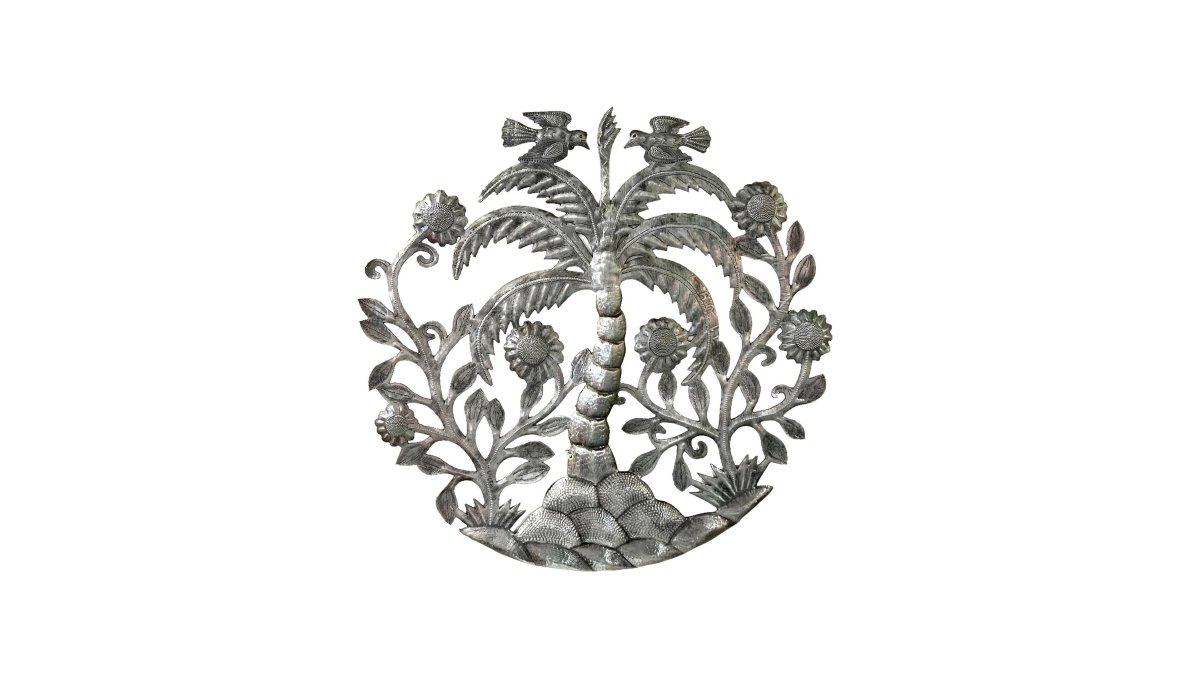
Start with a neutral base: white walls, a linen sofa, natural wood tones. Then add one or two handcrafted focal pieces. A 21-inch Steel Gourd Plant or the 23-inch Large Steel Sunflower Palm reads as sculpture against a plain wall, and the brushed metal finish fits a modern organic palette better than most people expect.
Match the Material to the Room
Material choice is where sustainability and durability intersect. Getting it wrong shortens a piece's life and undercuts the point of buying ethically.
- Recycled steel drum art suits living rooms, hallways, and covered patios. It is rigid, holds its patina, and resists the everyday knocks that crack ceramics. Keep it out of bathrooms and uncovered outdoor walls where moisture sits.
- Haitian clay pottery belongs in kitchens and dining areas. It is food-safe when glazed lead-free, but it is brittle. A spoon rest on the counter is a better fit than a mug on a high shelf.
- Natural fibers like woven baskets, jute rugs, and cotton throws soften a metal-and-wood palette. They show wear faster, so rotate them rather than replacing them.
- Reclaimed wood anchors a room and ages visibly. That is a feature in a modern organic scheme, not a flaw, but it means the piece will look different in five years than it does today.
The Budget Trade-Off Nobody Explains
Ethical decor gets framed as a premium category, but the cost comparison depends on how long you keep the piece. A $28 handcrafted mug that lasts ten years costs about $2.80 per year; a $6 mass-market mug replaced yearly costs $6 per year and generates ten times the waste. The upfront price is higher; the annualized cost is lower.
That math only works if you keep the piece, which is why care instructions matter as much as the initial purchase.
Rules That Hold Up in Practice
- Group in odd numbers, but keep one piece as the clear anchor.
- Mix textures deliberately: metal against woven natural fibers, clay against smooth wood.
- Leave negative space. Clutter undercuts the conscious space you are trying to create.
- Choose a color story and stay inside it. A tight palette makes a small collection read as intentional rather than sparse.
- Buy the anchor piece first, then let the room tell you what is missing. This prevents the impulse purchases that end up as waste.
Key Takeaway
The most sustainable design choice is not a material or a color. It is buying a piece you will still want in ten years. Style trends cycle; a well-made object outlasts them.
How to Clean Haitian Metal Wall Art Without Damaging It
Cleaning Haitian metal wall art takes five minutes and one soft cloth. Dust it dry, wipe with a barely damp cloth if needed, then dry immediately. Skip abrasive cleaners entirely.
The finish on steel drum art is a sealed patina, not paint. Abrasives strip it, and once it is gone, the surface will rust. Here is the routine that protects the piece:
- Dust with a dry microfiber cloth every two to four weeks.
- For fingerprints or smudges, dampen a cloth with plain water and wipe gently.
- Dry the surface right away with a second cloth.
- Keep pieces out of prolonged direct moisture, including bathroom walls near showers.
- For outdoor display, bring the piece in during extended rain or freezing temperatures.
Hand-washing matters for clay pieces too. The Rustic Kitchen Spoon Rest and the Honor Mug - Cobalt both hold up best with soap, water, and air drying. The mug's lead-free glaze is food safe, but the maker recommends against dishwasher and microwave use.
Watch Out
Never use steel wool or abrasive cleansers on steel drum art. The scratch marks are permanent, and the exposed metal will begin to rust within weeks.
Budget-Conscious Ethical Sourcing: Small Pieces, Big Impact
Budget-conscious ethical sourcing starts with small objects. You do not need a $500 furniture budget to buy responsibly. A $9 Steel Drum Metal Numbers piece or a $12 Rustic Kitchen Spoon Rest carries the same fair trade supply chain as a large statement work.
Ethical decor gets framed as a premium category, pushing budget shoppers toward mass-produced alternatives that cost less upfront and more over time. The math flips once you account for replacement cycles.
A practical approach for a tight budget:
- Start with one anchor piece in the $18 to $32 range, like the Steel Drum Dish or Hanging Lanterns.
- Add small pieces over time rather than buying a full set at once.
- Shop gift occasions first. Birthdays and housewarmings are natural entry points.
- Prioritize pieces you will see daily. Kitchen and entryway items earn their cost fastest.
Key Takeaway
The cheapest ethical decor strategy is buying fewer, better pieces. Two $20 handcrafted items that last a decade beat six $8 imports that get replaced every year.
End-of-Life Disposal and Local Sourcing for Ethical Decor
End-of-life disposal is the part of ethical decor almost nobody plans for. Ask what happens to a piece when you no longer want it. Metal art is fully recyclable at most scrap metal facilities.

Clay and ceramic pieces are harder. Broken pottery is not recyclable in most curbside programs, but it can be repurposed as drainage material in planters or crushed for garden paths. A cracked mug still has a second life.
Local sourcing closes the loop. Buying from regional artisans cuts shipping distance, supports your local economy, and gives you a direct relationship with the maker who can often repair or repurpose a piece later.
The Environmental Protection Agency's guidance on reducing waste outlines how reuse and recycling fit into a circular approach. Applied to decor, that means buying pieces designed to be repaired, resold, or recycled rather than discarded.
Building a home that reflects your values takes more than a single purchase. It takes knowing which materials, makers, and lifespans you are willing to stand behind.
Papillon Marketplace makes that choice straightforward. Every piece in the collection is handcrafted by Haitian artisans, produced through fair trade practices, and made from upcycled materials like recycled steel drums and authentic Haitian clay. The result is decor with a story you can trace and a supply chain you can trust.
Get started with Papillon Marketplace and furnish your modern home with pieces that support real families and real craftsmanship.
Frequently Asked Questions
What defines ethical home decor?
Ethical home decor is made with respect for people and the planet. That means fair wages for artisans, safe working conditions, and materials that are recycled, natural, or responsibly sourced. It also means transparency about where and how a piece was made. Look for fair trade certification, artisan stories, and material details. If a brand cannot explain its supply chain, it is not ethical decor, no matter how it markets itself.
How can I tell if home decor is truly sustainable?
Start with the material list. Recycled steel, reclaimed wood, natural clay, and organic fibers are strong indicators. Then check the brand's manufacturing claims. Sustainable pieces are often small-batch and handcrafted, which reduces overproduction. Ask about packaging too. Biodegradable or plastic-free shipping matters. Finally, consider durability. A well-made piece that lasts decades has a lower carbon footprint than a cheap item you replace every year.
Why is fair trade important for home accessories?
Fair trade ensures artisans earn a living wage and work in safe conditions. Without it, home accessories often come from exploitative supply chains where workers are underpaid and exposed to hazards. Fair trade also supports community development, funding schools, healthcare, and training. When you buy fair trade home accessories, your purchase directly supports ethical labor and helps break cycles of poverty. It is a simple way to align your decor with your values.
Are sustainable home goods more expensive?
Often, yes, but the price reflects real costs. Handmade items take time, skill, and fair wages. Mass-produced decor is cheaper because labor is cheap and materials are low-grade. That said, you can find affordable ethical pieces. Small items like a $9 steel drum number or a $12 spoon rest let you support fair trade without a big spend. Think of it as an investment in quality and values, not just a purchase.
How do I style ethical decor in a modern home?
Start with a neutral base: white walls, natural wood, and simple furniture. Then add one or two handcrafted focal points, like a large steel drum wall art piece or a textured ceramic mug on an open shelf. Mix textures (metal, clay, fiber) to add depth. Keep colors muted if you prefer a minimalist look, or let a single artisan piece pop. The key is balance. Let the craftsmanship speak for itself without cluttering the space.